

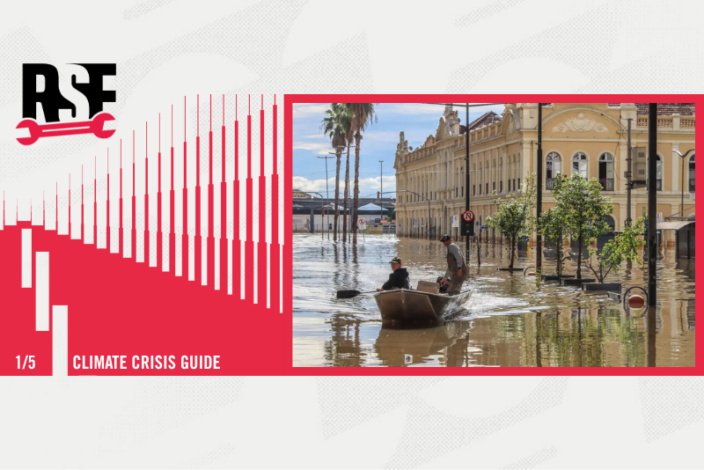

The climate emergency has made resilience a buzzword, used in the news, academia and corporate jargon.
Why?
Resilience to extreme events is the ability to adapt and recover from the impacts of storms, droughts, floods, and other disasters.* Building resilience therefore means understanding potential risks in different scenarios, both in terms of visible consequences of climate change and those likely to occur, and developing and implementing plans to mitigate these risks or withstand climate events.
*Definition by the Intergovernmental Panel on Climate Change (IPCC).
Extreme events expose journalists and other professionals to physical, urban, material, and psychological risks. From the lack of basic conditions due to interruptions in internet, electricity, and/or water supply in offices or loss of personal equipment, to precarious employment and lack of information, problems and vulnerabilities can arise in times of crisis.
In newsrooms, resilience involves a combination of coverage challenges and organisational factors, which unfortunately are still largely overlooked. Some of the main obstacles identified are:

Access the full version of the Climate Crisis Safety Guide for journalists in Portuguese.