

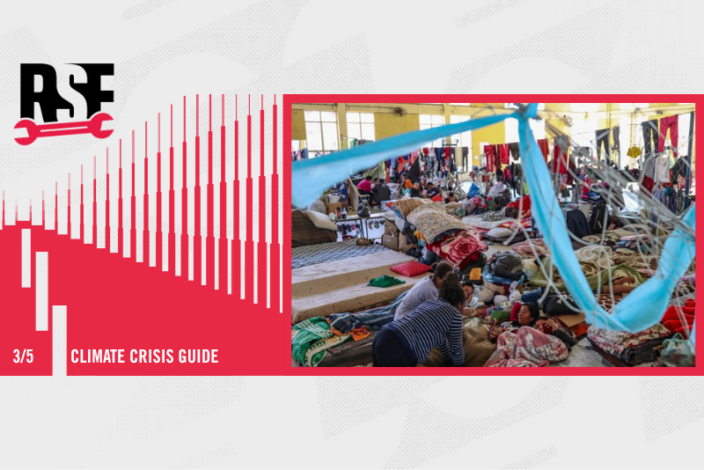

The following recommendations are essential for the safety of journalists directly involved in covering extreme events. They were prepared based on documents from organisations such as Reporters Without Borders (RSF), the Committee to Protect Journalists (CPJ), the James Fowley Foundation, and the Reuters Institute for the Study of Journalism.
Advance planning and risk assessment
- The first step towards safe coverage is to conduct a thorough risk assessment, detailing potential health hazards and medical evacuation procedures:
- Safety and health conditions at the destination
- Weather conditions and any specific issues
- Key local authorities
- Emergency services and other contacts that can be called upon in an emergency
On-site security
Constantly monitor the weather forecast, which can change quickly, requiring immediate changes to plans. When travelling to cover disasters, whenever possible, rely on support staff at the newsroom:
- Identify safe accommodation with access to food and water. It is often safer to stay outside the epicentre of destruction and travel to the affected area.
- Ensure that the accommodation is far from areas prone to flooding, such as low-lying areas, depressions, and dry riverbeds.
- When reporting in the midst of storms, avoid locations with large glass windows or corrugated metal roofs.
- Have a pre-planned exit strategy and access to reliable, independent transport, bearing in mind that you may be unable to use public transport and taxis.
Communication
A clear communication plan is a key component of safety.
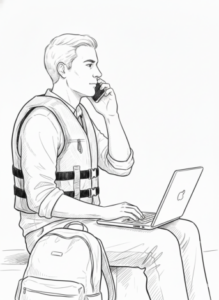
- Provide regular updates on your next steps and your location to the newsroom during your stay in the disaster area.
- Notify them of any changes to your planned itinerary or emergency escape route.
- Whenever possible, inform local authorities of your location.
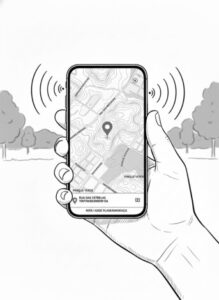
- Activate a geolocation application on your mobile phone so that your position can be tracked while you report.
Health and hygiene
In disaster areas, standing water is a health hazard as it may be contaminated with sewage and hazardous chemicals, spreading infectious diseases. Taking precautions to avoid getting sick is essential, especially since medical facilities may be overwhelmed or non-existent:
- Wash your hands regularly
- Check the source of the water you consume
- Never expose open wounds to flood water
- Personal hygiene must be maintained to avoid getting sick. If clean water is unavailable, use wet wipes.
- Long-sleeved clothing and easy-to-clean plastic boots can also provide a layer of protection.
Psychological care
News organisations should help their staff access resources such as psychological support, as well as accommodation for those most affected.
- Be alert to signs of trauma in yourself and your colleagues: difficulty concentrating, unusual irritability, intrusive thoughts or images, constant sleep disturbance, social isolation.
- Strategies to help cope: maintain social connections, schedule recovery time, seek support from colleagues, attend therapy sessions.
Access the full version of the Climate Crisis Safety Guide for journalists in Portuguese.