

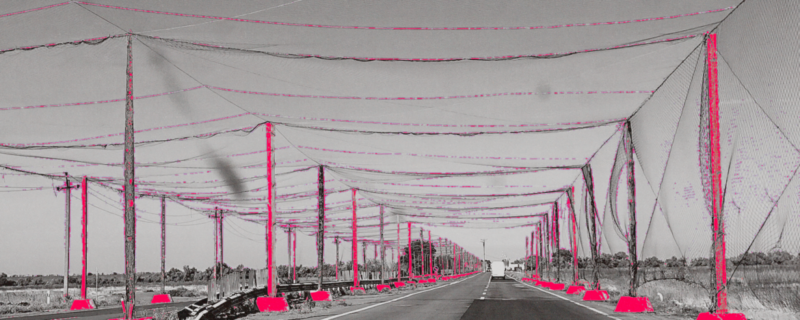

Drones, also known as unmanned aerial vehicles (UAVs), have become one of the main threats facing media professionals covering Russia’s war in Ukraine. In 2025, drone attacks killed one French photojournalist and two Ukrainian journalists. In response to the evolving situation in Ukraine, Reporters Without Borders (RSF) partnered with the Kherson-based Ukrainian foundation Union to publish a practical guide for news professionals to help them anticipate and mitigate the risks posed by Russian drones as effectively as possible.
Download the PDF (English – Ukrainian)
Watch the video (English – Ukrainian)
The guide — published in English and Ukrainian and accompanied by a video available in both languages — the guide was developed with the Union foundation, a Ukrainian human rights organisation based in the southeastern city of Kherson. It provides essential resources to help reporters better understand the drone threat, prepare for field assignments and strengthen their safety procedures.
The guide includes:
- descriptions of the main types of drones used by the Russian army in areas close to the front line;
- information on how Russian drones select targets;
- recommendations on how to prepare for an assignment, concerning clothing, visibility and protective equipment;
- practical guidance on how to work near the frontline and how to respond in the event of an attack;
- explanations regarding how to use drone detectors;
- a checklist to go through before assignments;
- emergency contact numbers.
| The drone safety guide and video offer practical recommendations, but they cannot eliminate all the risks of working in a war zone. The advice in this document is also recommended by the Institute of Mass Information, an RSF partner organisation in Ukraine. The guide does not address Iranian-made Shahed drones, also known as Geran, which follow preprogrammed GPS coordinates.
When the guide was being prepared, the satellite internet constellation, Starlink, became inaccessible to Russian armed forces in Ukraine. Although this had little impact on the frequency of drone use, it somewhat affected their operational range. Nevertheless, all the recommendations in the guide remain just as relevant in March 2026. This guide was produced with the financial support of the European Union. Its content is the responsibility of RSF and the Union foundation and can under no circumstances be regarded as reflecting the position of the European Union. |
This article is also translated in Russian.